Google Business Profile lead leaks usually happen after the tap.
A local-search click can be useful without becoming a call, inquiry or job. For a contractor, the more practical question is where a buyer's attempt to reach the business stops, and who owns the next step.
Last updated: October 18, 2026
Picture a homeowner who finds a plumber's Business Profile after a pipe begins leaking. They tap the call button, hear ringing, and hang up before leaving a message. Later, they tap the website link and land on a generic home page with no clear service-area answer. This is a hypothetical example, not a customer case. It illustrates two separate handoffs: a click that may not have become a conversation, and a visit that may not have become a usable inquiry.
The profile is only the start of that path. This checklist helps a small service team inspect the phone, website and scheduling steps it actually controls. It is not a promise of more calls, better rankings, booked work or revenue. Start with a bounded sample of business-owned records, not a claim that a dashboard knows what happened to every buyer.
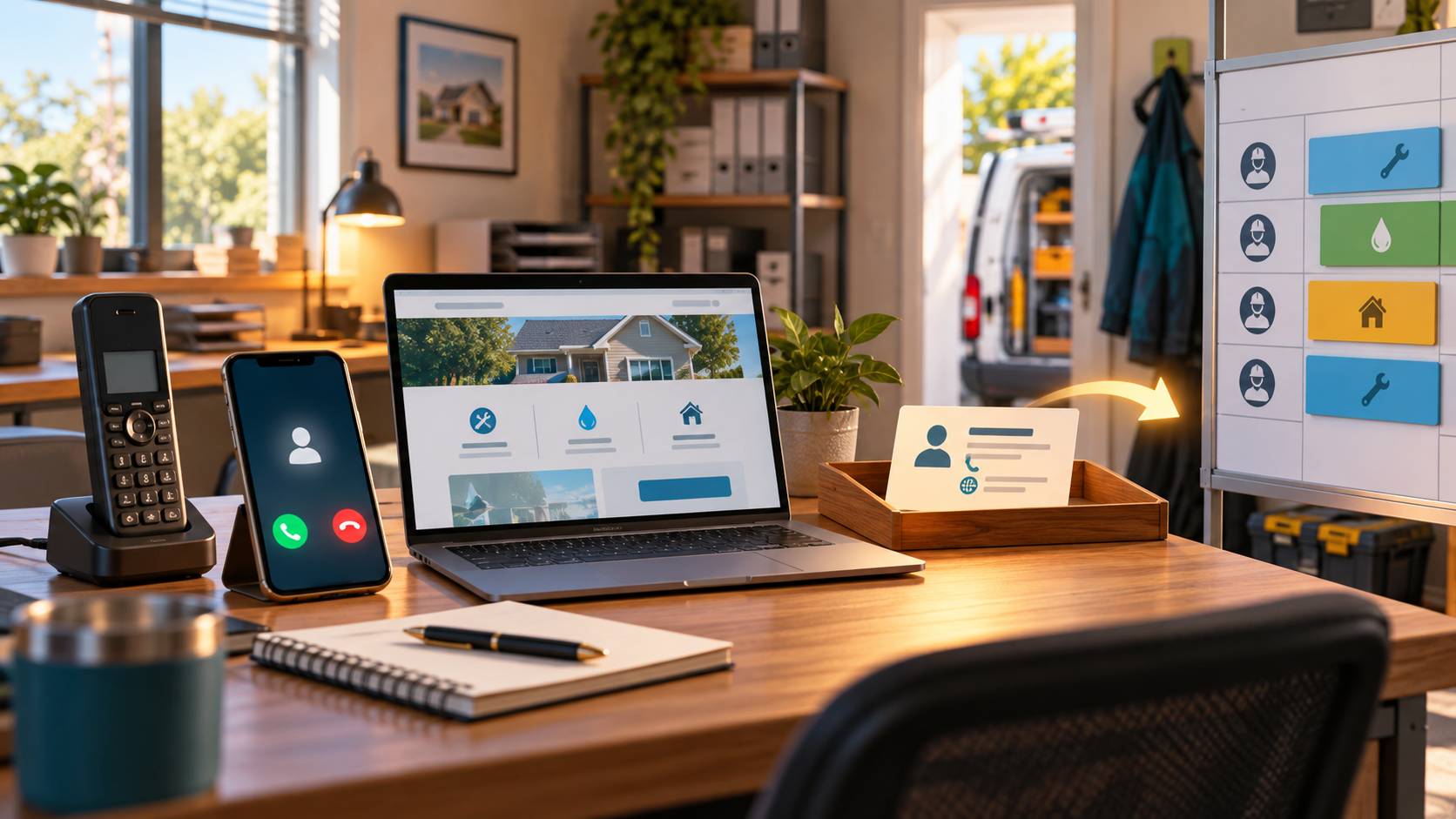
The tap is a signal, not the outcome
Google's Business Profile performance help defines the Calls measure as clicks on the call button. A click is not proof that a phone rang, a person answered, or an appointment was booked. The same distinction applies to website clicks: they count clicks on the link, not completed forms. Compare these aggregated interactions with the business's own phone-system and form records before deciding where follow-up failed.
Do not expect to recover a current native Business Profile call-history log. Google ended the old Profile call-history feature and its old chat channel in July 2024. Requests for quotes through that old chat route ended too, according to Google's feature-change notice. An older checklist that says “check Profile messages and quote requests” without qualification is no longer a dependable operating instruction. If the business uses a separate text or WhatsApp option that Google makes available to its verified profile and region, treat that as its own enabled channel with a named responder, not as a universal feature.
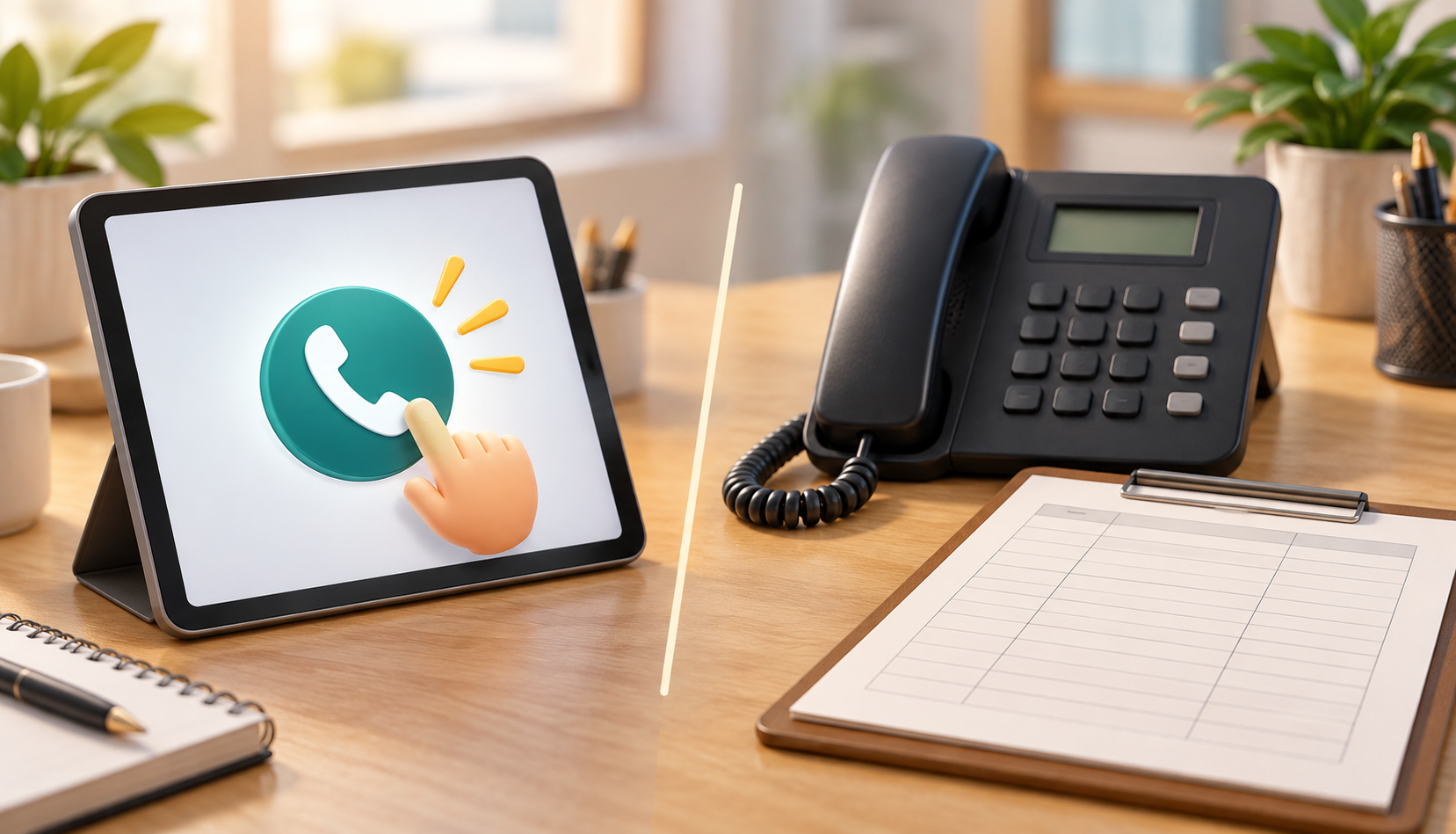
A one-week audit that a contractor can finish
Choose one recent ordinary week. Keep the dates consistent across sources and note anything unusual, such as a holiday or a phone-system outage. A tiny team can do this with a restricted spreadsheet. You need enough detail to locate a broken handoff, not an export of every customer's conversation. If a route is not measurable, write “unknown” rather than estimating from memory.
| Observed signal | Business-owned check | Handoff question |
|---|---|---|
| Profile call-button clicks | Phone-system arrival, answered and missed-call records for the same period, if available | Who notices a missed attempt and owns a permissible callback? |
| Profile website-link clicks | Consented site analytics, form delivery tests and actual inquiry records | Does the page answer this service question, and did a form reach the intended inbox or queue? |
| Booking-link use, if the business offers one | The business's appointment-system confirmation | Did the request become a confirmed booking, or only a page visit? |
| Optional text or WhatsApp route, only if enabled and eligible | The business's approved channel records | Is someone assigned to reply during stated hours? |
These rows are not a funnel formula. Traffic can come from other sources, and timing or tracking definitions may differ. Do not subtract one dashboard total from another and call the remainder “lost leads.” Instead, use a few redacted examples to test whether an actual contact attempt reached a responsible person.
Follow the phone path from ring to owner
Call the published number from a device outside the business during ordinary hours, with the team's permission. Confirm that it reaches the right office or service line. Then ask what happens when the person who normally answers is on another call. Is there a voicemail, an answering service or a shared queue? Who checks it, and at what point? A published number can be correct while the internal handoff is unclear.
Look at a small sample of missed calls in the business's own system. Note the time, a redacted identifier, the responsible owner, whether a callback was appropriate and the actual next action. Respect contact preferences and applicable rules. Do not place customer numbers, recordings or sensitive job details into a public article or an unapproved AI tool. Where the team cannot prove a callback occurred, leave that row open rather than treating a task reminder as a completed conversation.
The missed-call calculator can frame a scenario for discussion. Its figures are directional assumptions, not recovered revenue. A separate response-time calculator can help the office think about the delay between a contact and its next action. Neither can tell whether an individual Profile click became a sale.
Make the website click lead somewhere useful
Open the exact website URL attached to the profile on a phone. A visitor seeking a roof leak repair should not need to navigate through three generic pages to learn whether the contractor covers the address or how to ask for help. The destination should identify the service, the real service area, the hours or response limits that matter, and a clear contact method. Do not claim 24-hour dispatch if the office only reviews messages the next morning.
Test the contact path with a harmless sample, clearly marked as a test. Verify the form validation, success message, actual delivery destination and the person able to act on it. The visible “sent” screen is not sufficient if the notification lands in an unattended mailbox. For appointment tools, confirm what counts as a request versus a confirmed slot. If the page asks for more personal detail than intake needs, remove the excess rather than adding it to the audit.
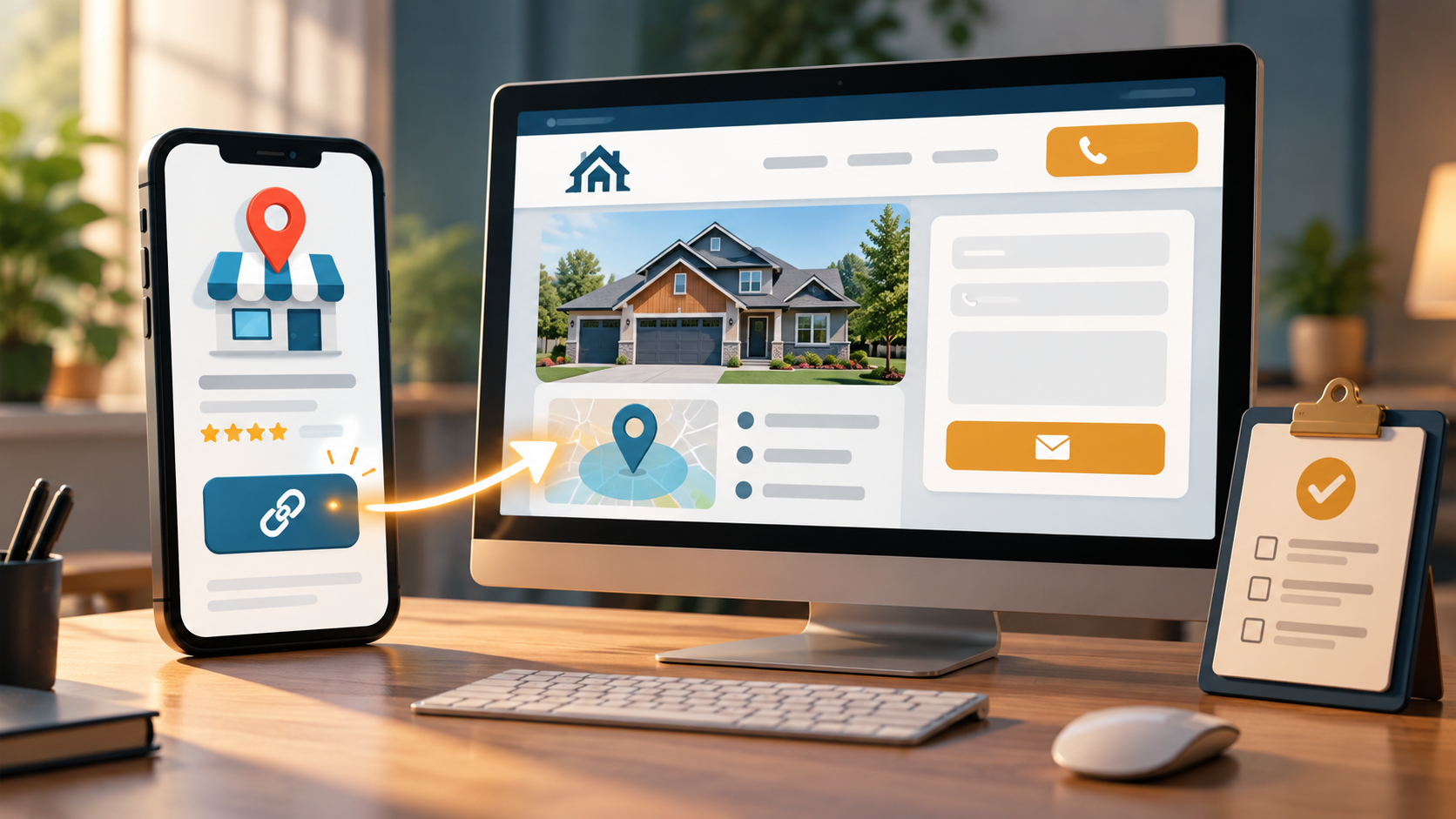
After hours, say who takes the next shift
Urgent and routine requests need different handling, but those categories must reflect what the business can truly provide. A plumbing company may decide that an active leak reaches an on-call person while an estimate waits for office hours. Another company may not offer an on-call service at all. The public page and automatic reply should match the real arrangement. Never imply that a technician is dispatched until the team has confirmed it.
Take one hypothetical evening inquiry. The visitor sends a brief description and a preferred contact method. The intake system records the time and routes it to the person named for that shift. If no one is available until morning, the confirmation says when the business expects to review the request rather than promising an immediate fix. On the next shift, the owner records contact attempted, reached, scheduled, out of scope or still open. Those states are more useful than a single “lead received” count.
If the issue presents an immediate threat to life or safety, a marketing form is not an emergency service. The business should use clear, accurate directions to appropriate local emergency help where relevant, not an automated assurance it cannot perform.

Reviews are trust work, not a substitute for intake
Reviews can help a prospective buyer assess a business, but they should not be filed as open sales inquiries unless the customer has actually asked for a service follow-up through an appropriate channel. Answer reviews respectfully and keep private case details out of public replies. Do not use a negative review as a pretext to post personal information or pressure the reviewer.
Google's review guidance calls for genuine experiences and prohibits incentives for posting, changing or removing a review. Ask for feedback fairly, without selecting only happy customers or conditioning a discount on a rating. A sound review practice can support trust, but it does not repair an unanswered call or guarantee a search position.
Keep a small, honest response board
For each actual inquiry the business is authorized to review, record a source when known, the time it reached the business, the issue category, the assigned person, a next action and an outcome only when confirmed. Use a restricted system with appropriate access and retention. Keep uncertain attribution as uncertain. A contractor does not need a heavy new CRM to discover that two people both thought the other owned an after-hours voicemail.
- Check the live Profile phone and website links, including mobile behavior. Record the exact URLs without changing an established article or service-page path merely to chase a phrase.
- Compare one ordinary week of Profile interaction totals with the available business-owned phone, form and scheduling evidence. Label definitions and gaps.
- Trace a few redacted, permissioned contact attempts through to a named owner and next action. Keep hypothetical examples separate from real cases.
- Fix one broken handoff, such as an unattended form inbox or an unclear callback queue. Test it again before calling it repaired.
- Review the process a week later. Count only contacts, conversations and jobs that the business's own records actually support.
When a second set of eyes is useful
If the team can name the issue but not locate the handoff gap, AI Cleanup Doctor offers a bounded review of the public path and a sanitized description of the office workflow. The sample reports show the format; the order page states the current scope and buyer safeguards. Start with one real public URL and one specific question, such as where a missed call goes after office hours. Do not send customer records, account credentials or private recordings with an initial request.
Review the AI Leak Scan order page