Google Business Profile Follow-Up Cleanup for Local Service Contractors
A practical way to separate profile interactions from real inquiries, assign a human owner, and show what happened before asking for more local marketing spend.
Last updated: October 15, 2026
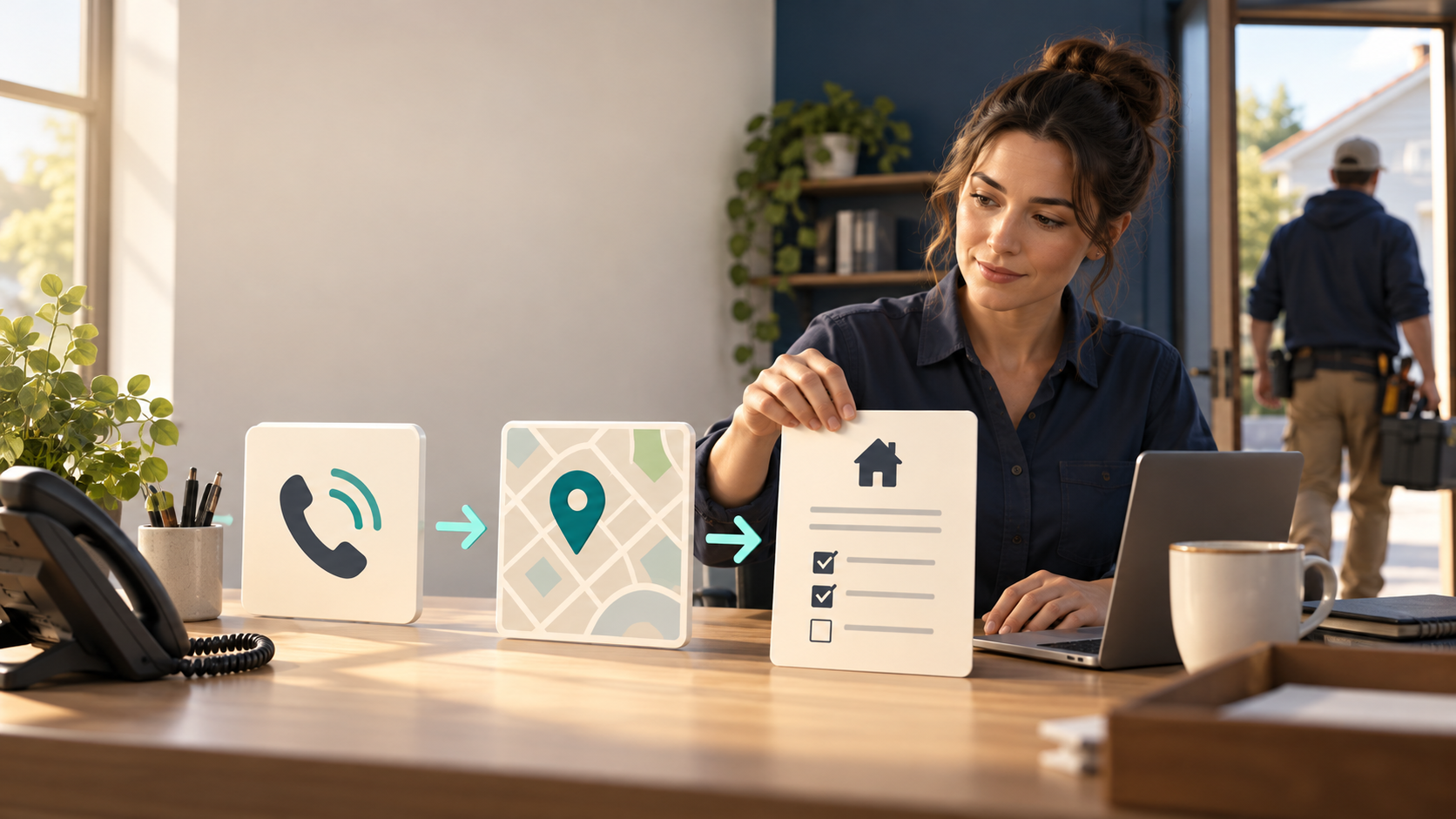
An owner can open a Google Business Profile performance report and see activity while still wondering whether anyone answered the actual people behind it. A click on the phone button, a click through to the website, an inbound call in the phone system, a qualified request, and a booked visit are five different events. They may be related, but they do not become the same event because they appear in one monthly presentation.
This guide is for a contractor and an authorized agency partner who want to inspect follow-up without taking shortcuts with customer privacy or promising more calls. AI Cleanup Doctor's useful role is to help organize a bounded review of existing records and response drafts. It does not control Google's metrics, verify a customer's identity, manage a client's profile without permission, or guarantee rankings, leads, booked work, or revenue.
A profile interaction is not a handled inquiry
Start by naming each signal precisely. Google's Business Profile performance help defines its Calls metric as clicks on the call button. That is not a count of calls answered by a dispatcher. Its Website clicks metric counts clicks on the profile's website link, not completed contact forms. Directions are requests for directions, not arrivals. If an agency dashboard labels these as "calls booked" or "new customers," the label needs correction before anyone uses the chart to approve more spend.
A contractor's own systems can answer different questions. The phone log may show whether a call connected, went to voicemail, or arrived outside business hours. A form inbox may show a submitted request. A scheduling system may show an appointment, cancellation, or completed visit. None of those records should be inferred from a profile-view total. Ask the person who owns each system which fields can be read and which should stay private.
Give every source its own line in a simple evidence register. Use "profile call-button click" for the platform metric and "phone system inbound call" for a call record. Use "website click" for the platform metric and "form submission" for a form record. If there is no lawful, reliable way to join the two, keep them separate. A blank connection is more honest than a guessed attribution.
The distinction matters at a weekly meeting. A high click count with a long voicemail queue suggests a response-capacity question. A modest number of genuine requests with many out-of-area contacts suggests a service-area or targeting review. Neither observation alone proves the cause. It tells the owner what to inspect next.
Build a small evidence chain before reporting results
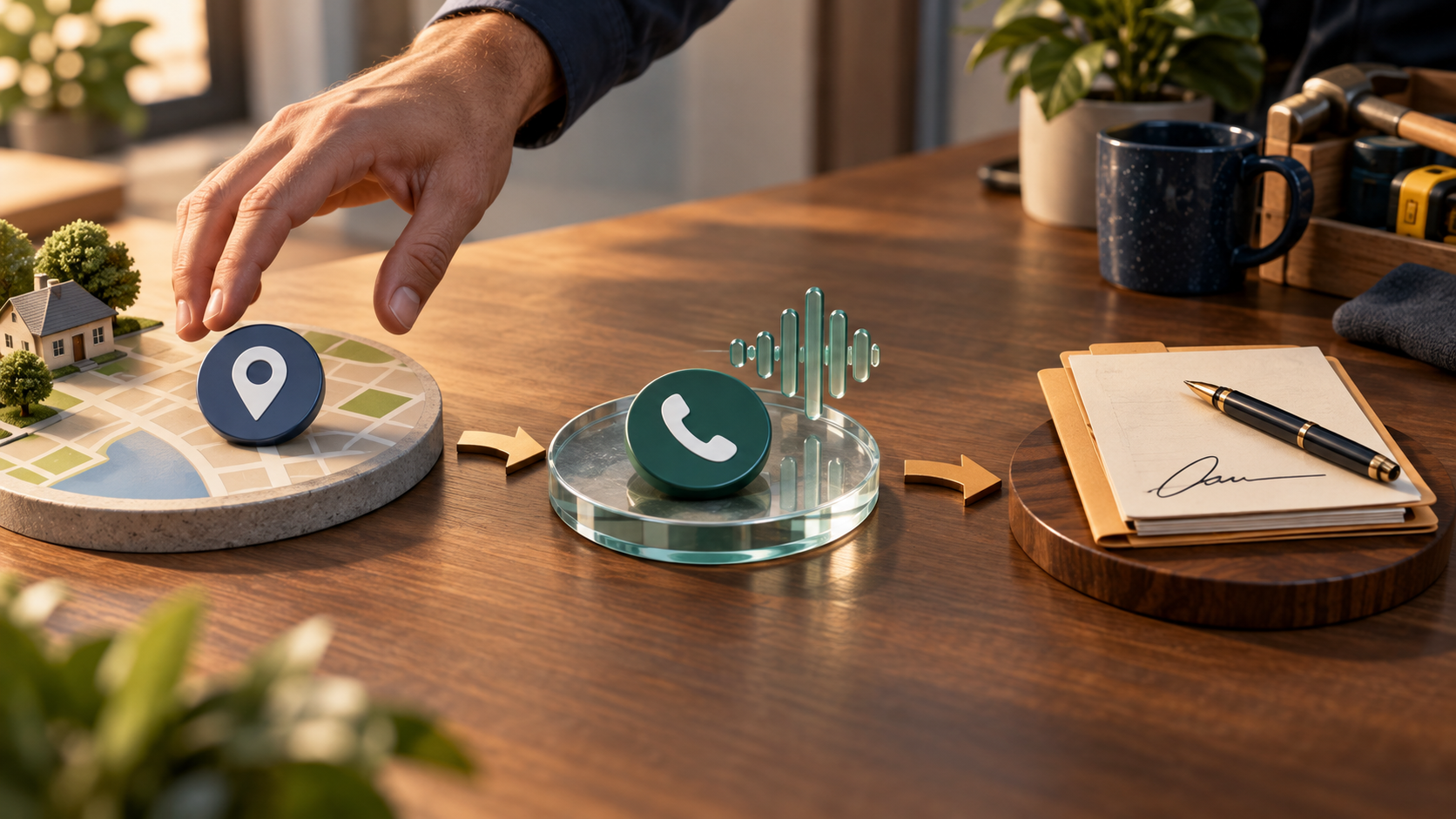
For a bounded sample of inquiries, use a table that a dispatcher can maintain without turning it into a surveillance project. The essential fields are the date, source as actually known, service requested, service area, contact permission, assigned owner, last touch, next action, and hold reason. If the business already has a ticket ID, use it instead of copying a full customer name into the marketing report.
Then choose an evidence status. "Confirmed" means the relevant source record exists and someone checked it. "Unlinked" means two events might be related but the connection has not been demonstrated. "Duplicate" means the same request arrived by more than one route. "Held" means a human decision is needed, perhaps because the service area, urgency, consent, or complaint status is unclear. These labels are working controls, not conversion-rate categories to inflate or hide.
Take a simple example: a homeowner clicks the website link from a profile, later calls from a different device, and then fills out a form. The agency may see one website click. The contractor may see a phone log entry and a form. Without a reliable link, do not present this as three customers or as one closed job. A dispatcher can verify whether the phone and form describe the same request, record a duplicate if appropriate, and assign one next action. If the customer has asked not to be contacted, that instruction overrides the convenience of a follow-up sequence.
Do not copy raw recordings, private details, payment information, or complaint narratives into a public case study. A contractor can review a small internal sample using authorized systems and share only the minimum aggregate or redacted result needed for a decision. The audit trail should make its source and limits visible.
Triage first, then decide whether a response is safe

Not every item that reaches the business should get the same automated reply. A clear request for a service the contractor offers, inside its actual service area, can move to a named owner. An unclear location or requested service needs a question, not a price claim. A suspected duplicate needs a record check so two team members do not chase the same person. A safety concern, dispute, refund request, or private detail should be held for the person authorized to handle it.
Public reviews are their own lane. Google's guidance on managing reviews explains that a verified business can reply to reviews. A reply is public, so the reviewer’s name, service history, address, invoice, medical information, or other private detail should not be disclosed simply to sound specific. Google's Business Profile guidelines also require accurate representation and prohibit private or confidential information in profile content. Draft a calm, general reply for owner review, or hold it if a private conversation is needed. Do not silently treat a review as permission to send marketing messages.
The same discipline applies to a missed call. A missed-call text should not imply that a diagnosis, appointment, or quote exists if no one has verified the request. Ask first whether the channel is authorized for that contact and whether the number is actually associated with the request. If those checks cannot be made, mark the record held. A short hold reason is more useful than a fast but wrong answer.
This is where an AI-assisted draft can help without pretending to make a business judgment. It can organize the known facts and flag missing service area, consent, owner, or next action. A human still decides what to send, whether to send it, and whether a public reply is appropriate.
A worked example, clearly hypothetical
Imagine a small HVAC contractor that serves three neighboring towns. On Monday, its profile report shows call-button clicks. The dispatch system also shows one after-hours voicemail, one answered call from outside its area, and one repeat caller asking about an existing job. These records are invented to illustrate a method; they are not AI Cleanup Doctor customer results, a Google case study, or evidence of a typical conversion rate.
The owner asks for a weekly review. The after-hours voicemail gets a named callback owner and a check of contact preferences before anyone sends a message. The out-of-area call is recorded as a service-area mismatch, not a lost sale. The repeat caller is routed to the existing-job owner, not added to a "new leads" count. If the profile click report cannot be reliably linked to those calls, the report keeps the click count separate.
At the next meeting, the useful question is not "How many profile views turned into jobs?" It is "Which known requests had an owner, what happened next, and which records still need a decision?" That question can produce a practical action list even with a small sample. It also gives an agency a fairer way to explain what is known and what remains uncertain.
Make the weekly report useful to a working contractor
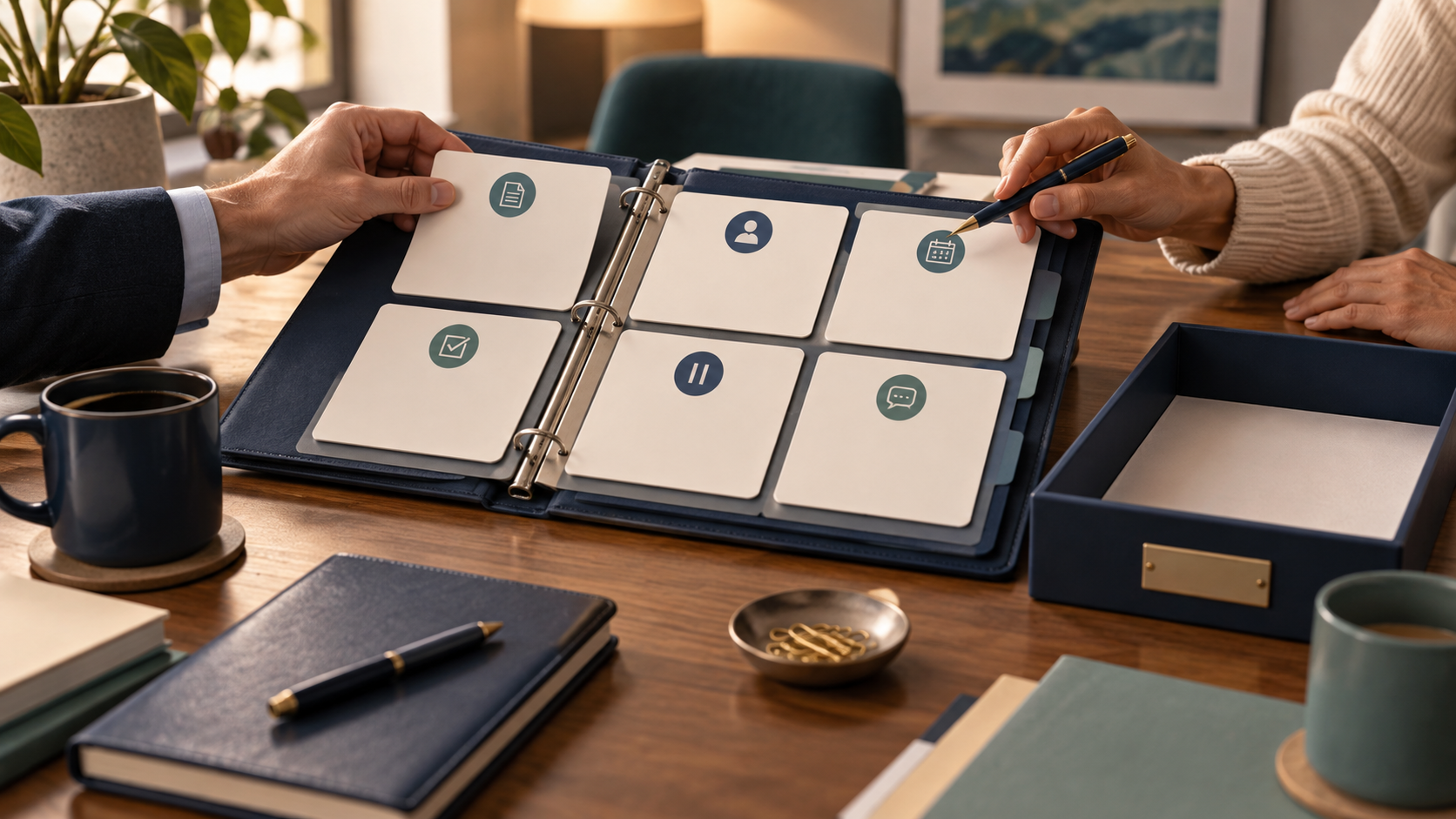
A one-page review should begin with the period covered and the systems actually checked. Put the platform interactions in one box and the contractor's confirmed inquiry records in another. Under the confirmed records, show the number with an assigned owner, the number awaiting a first touch, the number held, and the number whose next action has been completed. State whether these are counts of records, people, calls, or jobs. If a value is estimated or sampled, say so beside the value rather than burying that limitation in a footnote.
Add a brief exception list, not a customer dossier: "after-hours messages without an owner," "service-area mismatches," "repeat contacts on an open job," "review replies awaiting approval," or "records with no reliable source link." Each exception should have a responsible person and a next review date. Do not call every held item a lost lead. Some holds are exactly what a careful business should do.
The contractor should be able to make a decision from the page. It might change the after-hours routing, clarify service-area information, update a form field, train a dispatcher, or leave the profile alone for now. A reasonable decision can also be "we need better records before increasing spend." The report should preserve that option instead of forcing a marketing recommendation.
An agency can use the same page with a client, provided the client controls access and the presentation does not imply that the agency owns the client's Business Profile or customer data. The practical asset is a transparent decision trail: source checked, gap observed, owner assigned, action taken, and outcome still unknown where appropriate.
Decide what to fix before buying more attention
If a business cannot say who handles a profile-driven inquiry, first fix ownership. If phone and form records are available but not distinguishable from platform clicks, fix the reporting labels. If a contractor serves a narrower area than its profile or website suggests, review the information for accuracy with the owner. Google's representation guidelines call for an accurate service area and a profile that reflects the real business. Do not stretch the map or add keywords to the business name to chase a chart.
Once the handoff is visible, a contractor can decide whether to improve the profile, adjust its website, improve response coverage, or test more demand. No article can promise which choice will produce more work. A bounded review is still worthwhile because it prevents a platform interaction from being mistaken for a sale and gives each real request a clearer path to a human decision.
If you want to see the kind of fields before buying anything, use the follow-up cleanup checklist and sample reports. If a proposed reply feels too specific or risky, use the AI Reply Risk Checker as a draft review aid. These tools support judgment; they do not send messages or manage a client profile on their own.